A Drop Is Not a Dose: Rethinking CBD Titration Advice for UK Consumers
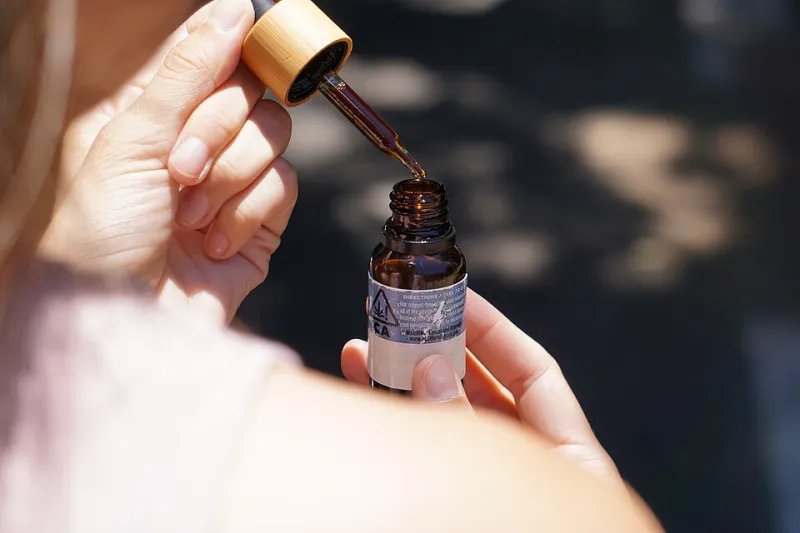
Photo: elsaolofsson, CC BY 2.0, via Wikimedia Commons
The phrase 'start low, go slow' has become the default dosing advice in UK CBD marketing. It appears on blogs, in product guides and in conversations between buyers. As a piece of harm-reduction shorthand, it is not wrong. As a complete instruction, it is too vague to be useful on its own. In a market where a drop can mean very different amounts of CBD, the slogan needs a rewrite.
This is an opinion piece grounded in product-quality and evidence questions, not medical advice. CBD is not a licensed medicine for most of the purposes for which it is sold, and readers with symptoms or prescription medicines should speak to a clinician or pharmacist.
Why the slogan travels so well
'Start low, go slow' has three virtues: it is short, it sounds cautious and it discourages the idea of taking a large amount immediately. Those are sensible instincts. The problem is that the phrase does not define 'low', does not define a 'drop' and does not say how slow is slow enough. It transfers responsibility to the consumer while leaving the product information as vague as ever.
In practice, a reader may see a 5% oil and a 20% oil both described as suitable for 'starting low'. They may see a dropper that delivers a different volume from the one pictured. They may see 'one drop' recommended without any milligram figure at all. The slogan survives because it is easy to repeat, not because it is precise.
A drop is not a dose
A dose is an amount of a substance, usually expressed in milligrams. A drop is a volume, and the volume depends on the dropper, the liquid and the way the bottle is held. Even if two droppers look similar, they may not deliver the same amount. More importantly, the same volume of two different oils can contain very different quantities of CBD.
Consider a simplified example. A 5% CBD oil contains roughly 50 milligrams of CBD per millilitre. A 20% oil contains roughly 200 milligrams per millilitre. If a dropper delivers 0.05 millilitres, one drop of the 5% oil is about 2.5 milligrams, while one drop of the 20% oil is about 10 milligrams. The instruction 'take one drop' has not told the reader which dose they are taking. It has only told them how many squeezes of the dropper to perform.
This is why product information should state milligrams per millilitre or milligrams per drop, not just a percentage. A percentage is useful for comparing concentrations, but it is not a dosing instruction. A drop is not a dose until the concentration and the drop volume are known.
The hidden variables: formulation and batch consistency
Concentration is only one variable. CBD oils differ in carrier oil, flavouring, bottle size and formulation. Some products use medium-chain triglyceride oil, some use hemp seed oil and some use emulsified or nano-emulsified formats. These differences can affect how much CBD reaches the bloodstream, although the evidence is not strong enough to support confident claims that one format is uniformly superior.
Bioavailability, the proportion of a dose that reaches the bloodstream, is low and variable for oral CBD. Food, timing, individual physiology and product formulation can all influence it. That does not mean that dosing is hopeless. It means that a consumer should not expect milligram-level precision from a product that has not been designed or tested as a medicine.
Batch consistency matters too. A certificate of analysis should show cannabinoid content for the actual batch, not a generic example. Without that, a reader cannot know whether this month's bottle matches last month's. The UK's novel food framework has improved some labelling and safety expectations, but it has not turned CBD oils into standardised medicines. A compliant label can still sit on a product that varies from another product with the same headline strength.
Titration in plain language
Titration simply means adjusting an amount gradually while paying attention to effects and tolerability. In a medical setting, it is a structured process. In the consumer CBD market, it is often reduced to guesswork. A better version of the advice would sound less memorable but more honest: know the milligrams, keep other variables steady, change one thing at a time and record what happens.
A practical sequence might be:
- Choose a product with a clear milligram-per-millilitre or milligram-per-drop figure.
- Calculate a starting amount in milligrams rather than relying on 'a few drops'.
- Keep the time of day, food intake and other medicines as consistent as possible.
- Wait long enough to observe the effect before increasing, rather than changing dose every few hours.
- Increase only if the product is well tolerated and the diary suggests a reason to do so.
- Stop and seek advice if side effects such as drowsiness, dizziness or gastrointestinal upset occur.
This is not a prescription and it is not a guarantee of benefit. It is a way of replacing a slogan with a record.
A simple symptom-and-timing diary
A notebook or phone note is enough. The aim is not to create a clinical trial in a kitchen. The aim is to give the reader better questions for a pharmacist, GP or specialist. A useful entry could record:
- date and time of use;
- product name, batch number and concentration;
- amount taken in milligrams, with the calculation if possible;
- time since food and any alcohol;
- other medicines or supplements taken;
- symptoms before and after, rated simply from 0 to 10;
- side effects and how long they lasted;
- sleep, stress and anything else that might explain the day.
After two or three weeks, patterns may emerge. They may also not emerge. Either outcome is informative. A diary can show that a 'low' dose was actually larger than expected, that symptoms varied with sleep rather than CBD, or that a particular batch felt different from the last. It can also help a clinician take the conversation seriously without relying on marketing language.
Better questions for brands and clinicians
Readers can ask brands for the milligram content per millilitre and per drop, the batch certificate of analysis, the THC content and the carrier oil. They can ask whether the product is on the relevant UK novel food list and what the label actually means. They can ask a pharmacist about interactions with prescribed medicines, especially sedatives, anticoagulants and medicines with narrow therapeutic windows.
Clinicians, in turn, need clear information rather than a slogan. 'I take two drops of a 10% oil twice a day' is less useful than 'I take approximately 10 milligrams twice a day from this batch, and here is what I have noticed.' That shift from drops to milligrams, and from memory to notes, is the real rewrite.
The rewrite
'Start low, go slow' should become something like: 'Know the milligrams, keep a record, and change one variable at a time.' It is less catchy. It is also more honest about what UK consumers are actually managing: variable products, limited evidence and a need for better questions. A slogan should not substitute for product information, and a drop should not be mistaken for a dose.