Counting Milligrams, Not Sheep: Auditing Sleep-Focused CBD Products Against the Evidence
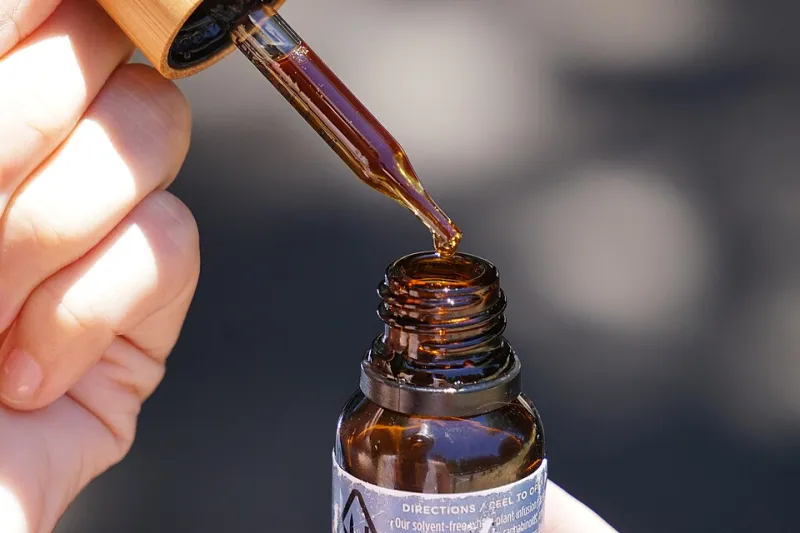
Photo: elsaolofsson, CC BY 2.0, via Wikimedia Commons
Walk into almost any high-street pharmacy or health-food shop in the UK and you will find a dedicated night-time shelf: droppers, gummies and sprays, often packaged in deep blues and purples, frequently placed next to the lavender and the magnesium. Sleep, by most commercial accounts, is where CBD sells. It is also where the gap between what a label implies and what the published evidence supports is at its widest.
This is not an argument against CBD. It is an argument for reading the sleep shelf the way you would read any other health product — with an eye on the dose, the co-ingredients, the claim, and the reason you are awake in the first place.
Why sleep dominates the category
Insomnia is common, distressing and, for many people, inadequately addressed. Waiting lists for talking therapies such as CBT for insomnia (CBT-I) remain long in much of the UK, and prescription sleeping tablets carry well-documented concerns about dependence and next-day sedation. That combination creates a genuine gap, and a commercially attractive one.
CBD's appeal in that gap rests partly on a plausible mechanism — the endocannabinoid system does influence sleep-wake regulation — and partly on an appealing safety story. Because CBD is sold as a food supplement rather than a medicine in the UK, shoppers often assume it sits outside the risk conversations that accompany prescription sedatives. That assumption deserves scrutiny.
What the human evidence actually contains
The honest summary is that the insomnia literature on CBD is small, heterogeneous and frequently overstated in marketing. Several systematic reviews in recent years have concluded that the quality of evidence is low, sample sizes are modest, and results are mixed. Some trials report improvements in total sleep time or sleep latency; others find no meaningful difference from placebo.
Several features of that literature matter more than the headline results:
- Population. Many studies recruit people with anxiety, chronic pain or epilepsy and measure sleep as a secondary outcome. Findings in those groups do not automatically transfer to primary insomnia in an otherwise healthy adult.
- Dose. Trial doses commonly range from around 25mg to several hundred milligrams per day, sometimes divided across the day rather than taken at bedtime. A 10mg evening drop is not a scaled-down version of a 300mg trial protocol; it is a different intervention at a different magnitude.
- Duration and design. Many studies run for a few weeks, with small groups and limited blinding. Long-term data on nightly use are thin.
- Formulation. Trials usually use a standardised isolate or a defined extract, not an unstandardised retail oil of uncertain cannabinoid content.
None of this means CBD cannot help some people sleep. It means the evidence is not yet strong enough to justify the confidence with which some products are positioned.
The dose on the dropper versus the dose in the trial
A recurring problem in UK retail is that consumers have very little idea how much CBD they are taking. Concentration varies enormously: a 10ml bottle containing 1,000mg yields roughly 100mg per millilitre, while a 30ml bottle containing 300mg yields around 10mg per millilitre — a tenfold difference that a shopper may not notice.
Drop size adds further uncertainty. Many brands state that a drop is approximately 0.05ml, which at 100mg/ml would be about 5mg of CBD. Others are vaguer. Unless the label states both the total cannabinoid content and the volume of a serving, the number you believe you are taking may be little more than an estimate.
If you are trying to compare your routine with published research, that matters. It also matters if you later describe your intake to a GP or pharmacist, who will reasonably ask how much you take and how often.
What else is in the bottle
Sleep-focused CBD products are rarely CBD alone. Common companion ingredients include valerian root, hops, lemon balm, L-theanine, magnesium, lavender oil and various terpenes. Some products also include diphenhydramine, a sedating antihistamine found in some UK over-the-counter sleep aids.
Three practical points follow.
First, most of these co-ingredients have their own modest and contested evidence base. A product combining six of them is not six times more likely to work; it is six variables in an uncontrolled personal experiment.
Second, combination products make attribution difficult. If your sleep improves, you will not know which component did the work — and if you experience daytime grogginess or an unusual reaction, you will have the same difficulty in reverse.
Third, some ingredients are medicines in the UK. Melatonin, for example, is prescription-only; its appearance in imported sleep products sold online is a regulatory red flag rather than a bonus. Check the label for anything you would not expect to find on a UK shelf.
Interaction questions worth raising
CBD is metabolised largely by the CYP2C19 and CYP3A4 enzyme pathways and is a recognised inhibitor of several of them. That makes it a plausible source of interactions with medicines processed by the same routes, and the theoretical concern is greatest where sedation is already involved.
Medicines that merit a conversation before regular nightly CBD use include:
- Benzodiazepines and Z-drugs such as zopiclone or zolpidem
- Sedating antidepressants, including amitriptyline and mirtazapine
- Sedating antihistamines used for sleep
- Anticoagulants such as warfarin
- Certain anti-epileptic medicines, particularly clobazam
- Other centrally acting medicines, including opioids
The point is not that a dangerous interaction is established in every case — often it is not — but that the combination has not been adequately studied and warrants professional advice rather than a label review. A pharmacist is a sensible first stop and does not require a GP appointment.
Claims to treat with caution
UK advertising rules require that food supplements are not presented as medicines. Phrases such as 'treats insomnia', 'cures sleeplessness' or 'clinically proven to improve sleep' should prompt scepticism, particularly when no trial reference, dose or population is given. If a brand cites research, check whether the study used the same formulation and dose as the product in your hand — often it did not.
It is also worth checking the product against the FSA's novel food register. CBD extracts are regulated as novel foods in the UK, and authorisation has been a prolonged process; a product that cannot be traced to a listed application has unresolved compliance questions behind it.
A cautious checklist before you buy
- Confirm the total CBD content in milligrams and the volume per serving, then calculate your actual dose.
- Look for a batch-specific laboratory certificate showing cannabinoid content and, ideally, contaminant testing.
- Note every co-ingredient, particularly anything you would not buy separately.
- Ask whether the claim on the front is supported anywhere on the back.
- If you take any prescription medicine, speak to a pharmacist before starting.
- Give it a defined trial period and record sleep quality honestly, rather than relying on memory.
When to look beyond the shelf
If sleeplessness is persistent, is affecting daytime functioning, or comes with low mood, anxiety or loud snoring, a GP appointment is more valuable than another bottle. CBT-I remains the recommended first-line approach for chronic insomnia in UK guidance, and it is available through NHS talking-therapy services in many areas.
CBD may have a role for some people. What it does not yet have is the evidence to justify a shelf label being read as a prescription — or a quiet assumption that because it is sold alongside the lavender, it carries no questions at all.