A Separate Shelf: Auditing CBD Against Winter Cold Remedies

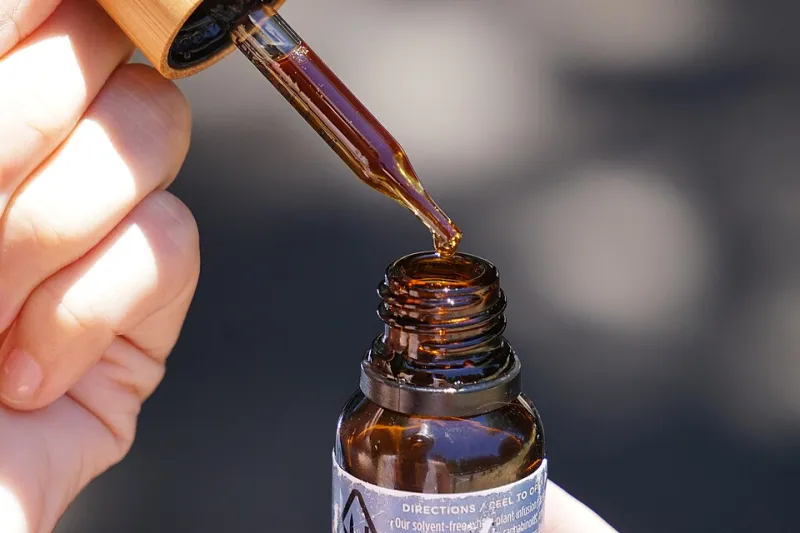
Photo: Wilfredor, CC0, via Wikimedia Commons
Every winter, the same quiet ritual plays out in kitchens across the UK: a drawer is opened, a half-used box of sachets is retrieved, and a bottle of CBD drops is set down beside it. The reasoning feels reasonable enough — one product is for the sniffles, the other is for sleep or aches, and neither carries a prescription. But that framing treats CBD as a harmless add-on to the cold-and-flu cupboard, when in fact it is a pharmacologically active substance being layered onto products that frequently contain three, four or five active ingredients at once.
This article is not a warning against combining anything. It is an argument for separating the decisions. Choosing a cold remedy is one decision, made on the basis of symptoms. Choosing to take CBD is another, made on its own footing. When the two are collapsed into a single reach across the kitchen counter, the checks that would normally happen at a pharmacy get skipped.
Why CBD escapes the usual scrutiny
In the UK, most CBD on sale sits in the food supplement category rather than the licensed medicines category. The only CBD medicine licensed here is a prescription product for a small number of rare epilepsy syndromes. Everything else — oils, capsules, balms, gummies — is regulated as a novel food, with the Food Standards Agency maintaining a public list of products for which authorisation has been sought.
The practical consequence is an asymmetry of information. A box of cold-and-flu sachets must carry a patient information leaflet listing active ingredients, doses, contraindications and known interactions. A bottle of CBD oil, by contrast, typically carries none of that. Its label may be accurate about cannabinoid content and still say nothing about how the contents behave alongside other medicines.
That absence of warning is not evidence of safety. It is simply an absence of warning.
The ingredients worth naming
The first step in any audit is to stop reading the front of the pack and start reading the ingredients panel. The remedies most commonly reached for during a UK winter fall into recognisable groups:
- Analgesics and antipyretics — paracetamol and ibuprofen, often included inside combination sachets as well as taken separately.
- Oral decongestants — pseudoephedrine and phenylephrine.
- Nasal decongestant sprays — xylometazoline and oxymetazoline.
- Cough suppressants — dextromethorphan, and in some pharmacy-only products, codeine.
- Expectorants — guaifenesin.
- Antihistamines — sedating options such as chlorphenamine and diphenhydramine; less sedating options such as cetirizine and loratadine.
- Stimulants — caffeine, frequently added to daytime cold remedies.
- Herbal additions — echinacea, pelargonium and others, which are not inert simply because they are plant-derived.
A single lemon-flavoured sachet can contain paracetamol, phenylephrine and vitamin C. A night-time syrup may contain dextromethorphan, an antihistamine and alcohol. Each of those is a variable, and CBD is one more.
Liver metabolism: the quiet common ground
Much of the plausible interaction concern sits in the liver. CBD is metabolised by cytochrome P450 enzymes, principally CYP3A4 and CYP2C19, and laboratory studies suggest it can inhibit several of these enzymes at concentrations that may or may not be reached in humans. Whether that translates into clinically meaningful changes to other drugs is genuinely uncertain — the human data are thin, drawn largely from epilepsy trials at prescription-grade doses far above typical supplement use.
Paracetamol is the ingredient most people take without a second thought. At recommended doses it is well tolerated, but it is also the leading cause of liver injury when doses creep up, often through accidental duplication across combination products. Some clinical trial data for high-dose CBD have shown rises in liver enzymes, particularly alongside certain anti-seizure medicines. That does not make a standard over-the-counter dose of paracetamol and a standard dropper of CBD a dangerous pairing, but it does make it a pairing worth mentioning to a pharmacist if you are using either regularly, if you have an existing liver condition, or if you drink alcohol most days.
Dextromethorphan is another name to note. It is metabolised partly by CYP2D6, an enzyme that CBD has been shown to inhibit in laboratory settings. The theoretical concern is a higher-than-expected exposure to the cough suppressant. Theory is not proof, but it is a reasonable prompt for a question.
Decongestants and blood pressure
Pseudoephedrine and phenylephrine work by narrowing blood vessels, which is precisely why they relieve a blocked nose and precisely why they carry cautions for people with high blood pressure, heart disease, diabetes or thyroid conditions. Some small studies have suggested CBD may modestly lower blood pressure; other work has not replicated this. The direction of any interaction is unclear.
What is clear is that this is not a combination to reason out alone if you take antihypertensives, have a cardiovascular diagnosis, or are on a monoamine oxidase inhibitor. The pharmacy counter exists for exactly this kind of question, and it costs nothing to ask it. Nasal sprays are generally less systemically absorbed than oral decongestants, but the label still merits a read.
Drowsiness stacking
Sedation is the most predictable interaction of the lot. CBD commonly causes somnolence in clinical trials. Sedating antihistamines, codeine and alcohol-containing night remedies all do the same. Layering them does not produce a novel pharmacological effect so much as an additive one — and additive drowsiness matters if you are driving, operating machinery or caring for someone overnight.
If a remedy is labelled 'night-time' or 'non-drowsy', those words describe the formulation's intent, not a guarantee for every user. Combining a sedating product with CBD and then getting into a car the following morning is the sort of decision that is easier to make well in advance than at 6am.
What the evidence can and cannot tell us
Most CBD interaction data come from laboratory work and from epilepsy trials using prescription-grade products. Observational data in supplement users are sparse. Case reports are uncommon, but under-reporting is likely. In the UK, suspected adverse reactions can be logged through the MHRA Yellow Card scheme, which is one of the few routes by which signals in supplement users are ever detected.
The honest position is this: the interaction profile of over-the-counter CBD is not well characterised. A cautious reader should treat that as a reason for careful sequencing, not as reassurance.
A practical checklist before the drawer opens
- List every product, including strength and how often you take it — over the counter, prescribed and herbal.
- Do the same for your CBD: concentration per ml, drops per dose, and total milligrams per day. 'A few drops' is not a dose.
- Read the active ingredients panel, not the marketing copy, and note when several products share an ingredient.
- Prefer single-ingredient remedies where symptoms allow, so there are fewer moving parts.
- Ask the pharmacist directly: 'I take this CBD product — is there anything in this cold remedy that could interact?' Name the product and the dose.
- Disclose the awkward things — alcohol intake, liver or kidney conditions, pregnancy or breastfeeding, and any prescription medicines.
- Watch the paracetamol total across sachets, tablets and combination products, and stay within the label.
- Keep a short symptom diary for the first few days, and stop and seek advice if anything unexpected appears.
Two decisions, not one
None of this argues that CBD and cold remedies must be kept permanently apart. It argues that they belong on separate shelves in your thinking, even when they sit together on the same kitchen worktop. A cold remedy is chosen for a symptom, on the strength of a label written for that purpose. CBD is chosen for its own reasons, usually with far less labelling to guide you. Treating the two as one gesture is how the useful questions get lost — and asking them, calmly and in advance, is the whole point.